
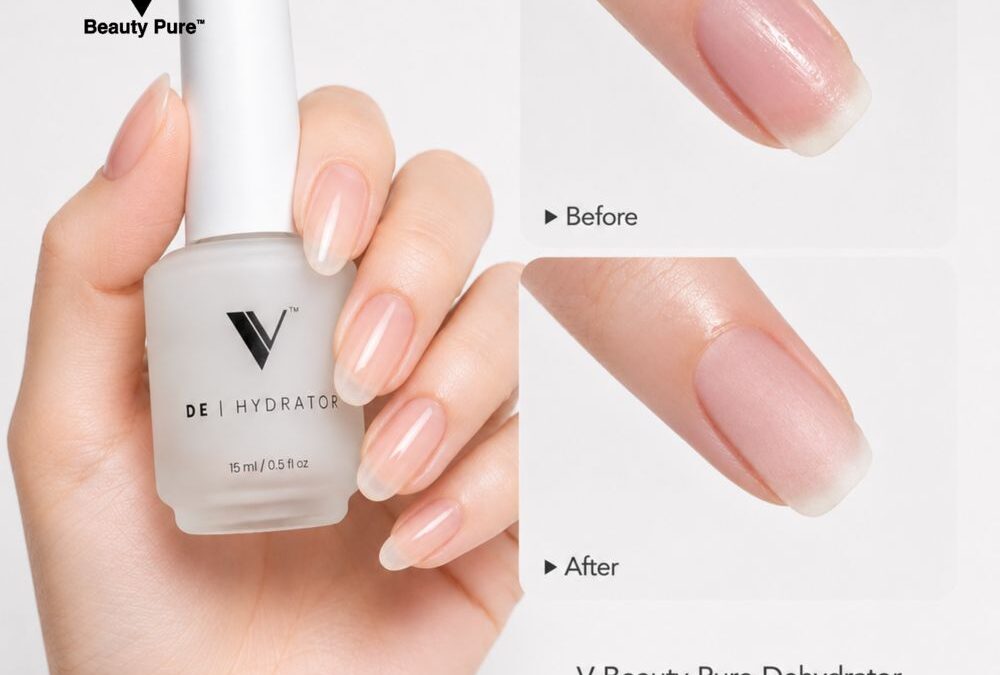
Start with a reframing: you are not applying a product, you are engineering a surface. Treating the natural nail correctly is a repeatable technical step that reduces rework and client callbacks. This guide trains staff to use a nail prep dehydrator consistently so finished services have better retention and fewer remedial visits.
Quick Start
Give each new tech a simple checklist for the first 30 seconds of prep. The dehydrator is applied after mechanical prep (cuticle work and light buffing) and before any chemical primer or adhesive. Emphasize sequence: clean surface, dry surface, then chemical bridge if used. Train staff to keep a dedicated station bottle to avoid cross-contamination.
Step Sequence
Teach the exact steps you want repeated at every service. Use short directives and practice them in order until they become procedural memory.
- Sanitize hands and ensure client hands are free of lotions or oils; wipe if necessary.
- Cuticle and shape—push back cuticles and remove visible debris without over-thinning the plate.
- Buff lightly with a 180–240 grit to remove shine where indicated, then remove dust with a brush or micro wipe.
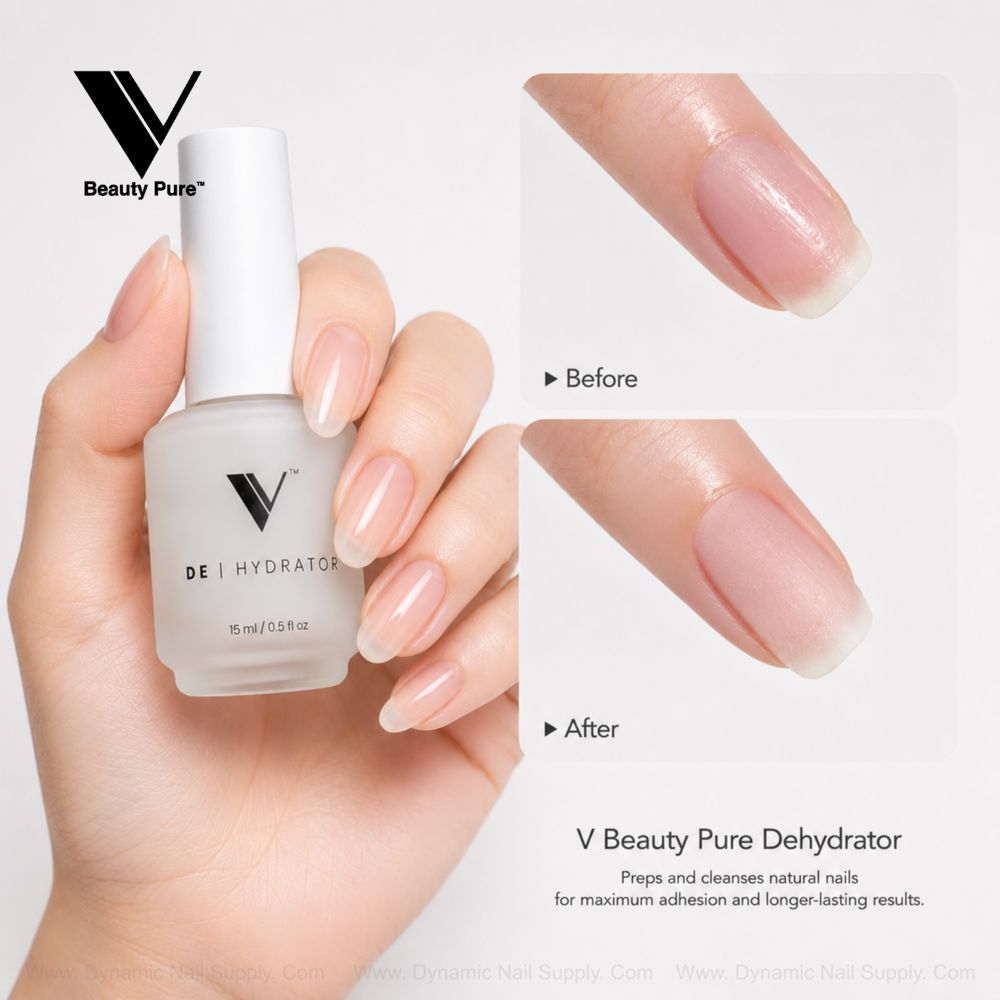
- Apply dehydrator—use the brush applicator to sweep a thin, even coat over the entire nail plate, avoiding surrounding skin. The formula is fast-drying; expect evaporation within seconds.
- Inspect for streaks or pooling. If visible pooling occurs, blot with a lint-free wipe and reapply sparingly if needed.
- Proceed with primer or base product as your system requires.
Practical Drills
Convert learning into muscle memory with timed drills. Have staff practice a five-nail sequence: push back cuticle, buff, dust off, apply dehydrator, inspect, and start primer. Time the sequence and reduce steps that cause hesitation. During drills, coach on brush angle and how much product to pick up—too much causes pooling; too little provides no benefit.
Mid-Station Reference
Keep a one-paragraph cue card on the desk that reads like a micro-procedure; include the key visual cues: matte nail plate, no liquid pooling, and no product on the cuticle bed. Use this lead-in to the product listing below
https://dynamicnailsupply.com/products/v-beauty-pure-dehydrator
Common Errors
Train staff to recognize and correct recurring mistakes rather than simply supervising. Common issues and corrections:
- Over-application: causes pooling and edge run-off. Correct by using the brush tip to thin the coat immediately and blot excess with a lint-free wipe.
- Applying too soon: if oil or cream residue remains after hand sanitation, re-clean with an appropriate remover and repeat dehydrator application.
- Skipping buffing: leaving the nail too glossy reduces mechanical grip for enhancements. Use light abrasion where your system requires it.
- Touching the cuticle: any product on soft tissue can irritate and interfere with adhesion. Train a steady hand and a confident brush stroke away from the skin.
Visual Checklist
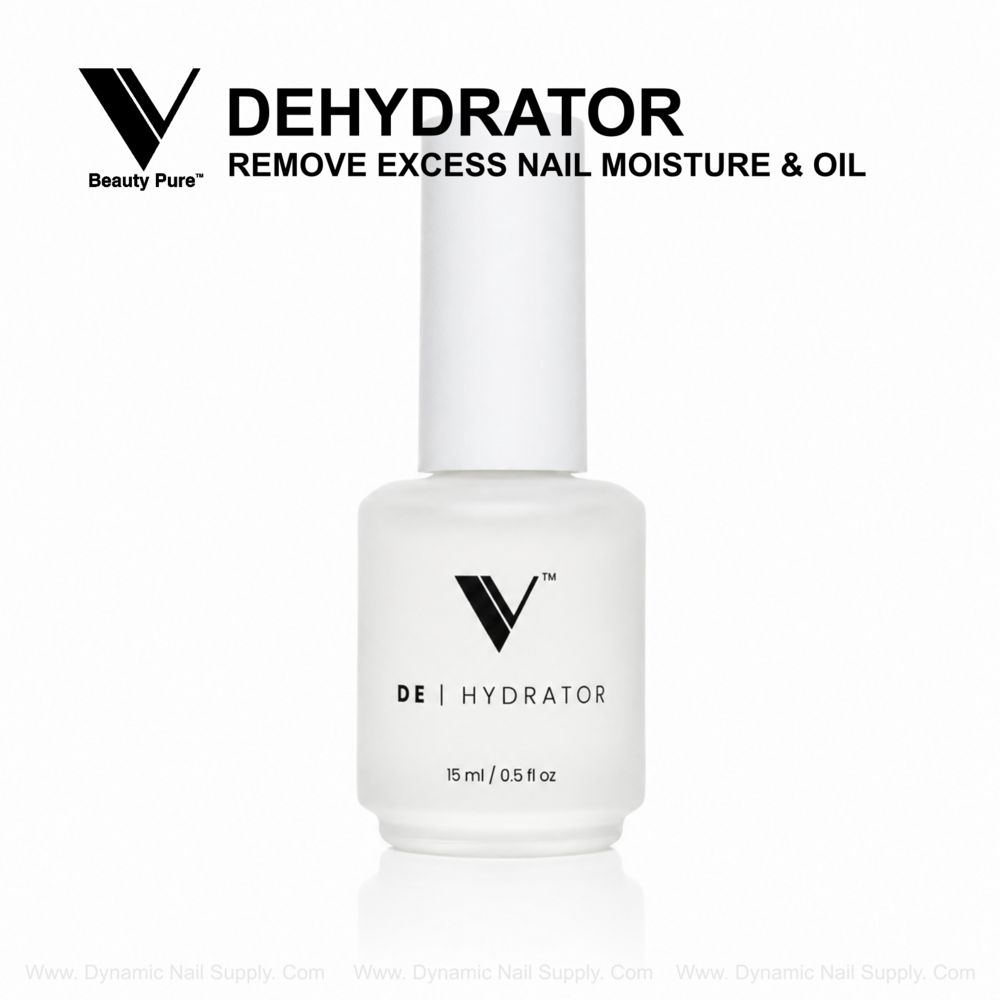
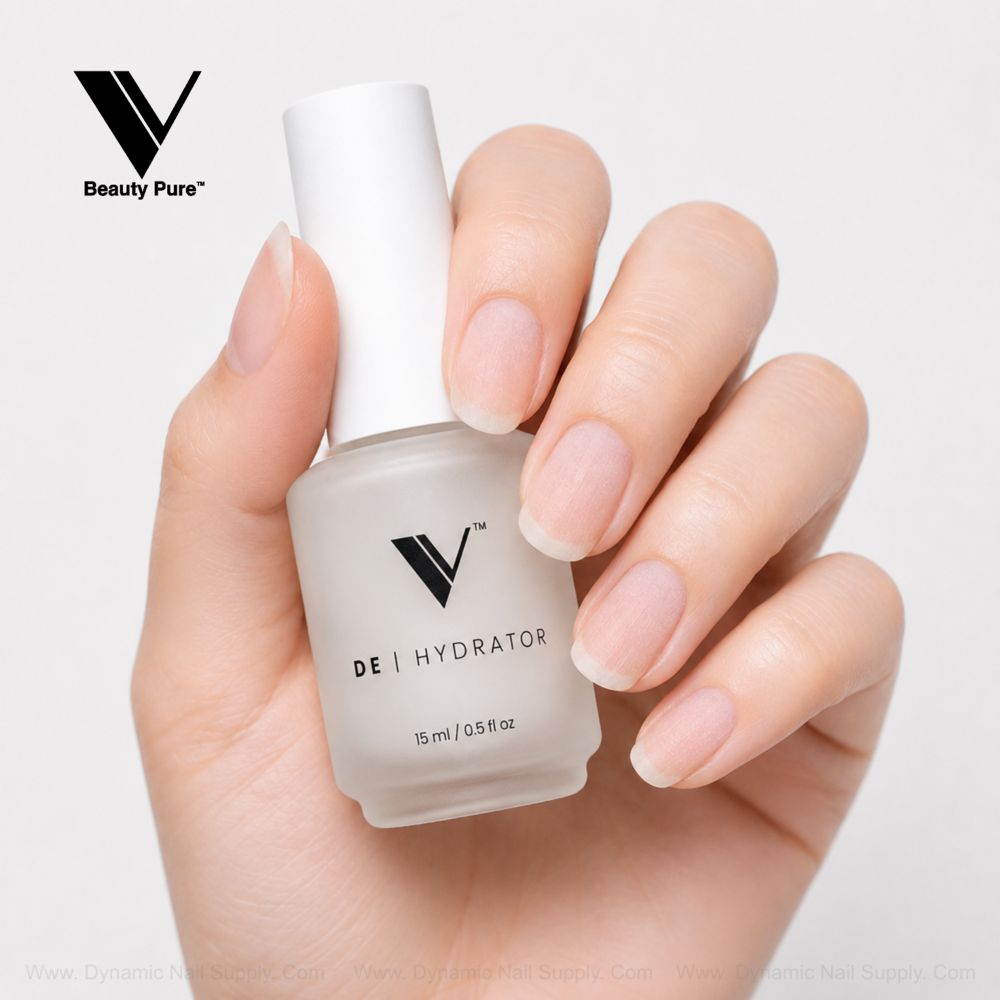
Use the product photo as a teaching asset. Point out these observable features and their practical implications:
- The frosted, matte bottle signals a clinical, low-gloss presentation—remind techs the tool is for preparation, not cosmetic shine.
- Natural, unpolished nails in the image highlight the intended substrate: a bare, buffed plate ready for bonding agents.
- Neutral palette and readable label support quick identification at a busy station; train staff to match label text and size before opening any bottle.
Best For
- Preparing natural nails before gel polish systems
- Improving adhesion for acrylic and dip powder services
- Setting up builder gel and hard gel applications
- Press-on nail preparation for longer wear
Not Ideal For
- Replacing a bonding primer—dehydrator is not adhesive
- Use on damaged or very thin nail plates without professional assessment
- Skin antisepsis—do not use as a hand sanitizer or skin disinfectant
Safety & Storage
Include a short safety brief in training: store upright at room temperature, keep the cap tightly closed to prevent evaporation, and avoid contact with eyes or mucous membranes. If product contacts skin beyond the nail plate, wipe off promptly with a lint-free wipe. Do not heat or store near open flame. Keep out of reach of children. No medical claims should be made during client consultations.
Performance Notes
Make retention outcomes measurable: record lift incidents and compare services done with and without the dehydrator protocol. Keep one bottle for demonstrations and another for active station use to reduce handling contamination. The 15 ml professional size fits most salon workflows; price may change, so check current stocking details before purchase.
Closing Invite
Train with repetition and objective feedback: time the sequence, inspect results, and correct technique on the spot. Test the protocol on mock services and then on select client appointments before full rollout. Explore the product details for staff reference when you’re ready.