
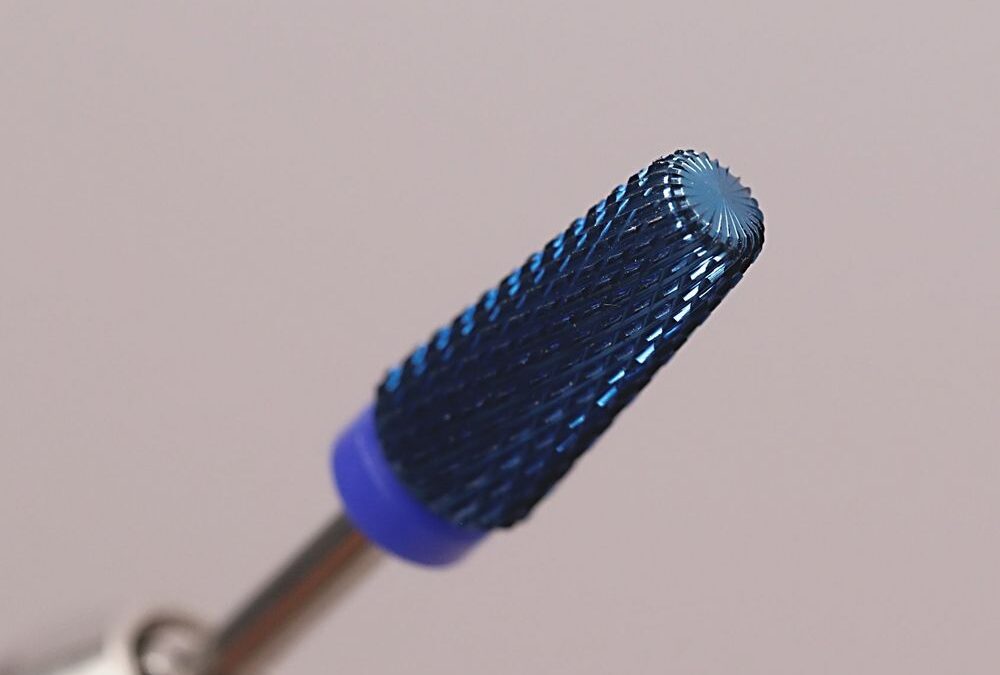
Start from an unexpected detail: the cobalt-blue head and purple collar tell you how the bit behaves before you touch the handpiece. That metallic cross-cut surface and plastic stopper change how heat builds, how debris evacuates, and how chatter appears. Use that visual cue to teach staff to read tool behavior, not just dial numbers.
Tool Orientation
Explain the part layout to your team. The metallic cobalt-blue carbide head carries a tightly cross-cut medium-grit texture; the matte silver shank connects via a medium purple plastic collar. The collar is a tactile stop that helps seat the bit securely in the chuck and gives a visual reference for depth. Train techs to verify the collar sits flush against the handpiece throat before powering on.
Speed & Torque Ranges
Use instrumented practice to set safe starting points. For a medium-grit, cross-cut carbide head used for shaping and smoothing, begin with conservative rotational speed and moderate torque. A recommended training range is to start low, then increase in controlled steps while observing heat and chatter.
- Starting RPM: Begin at a low speed for approach strokes; increase incrementally for material removal.
- Working RPM: Establish a mid-range speed for most shaping and smoothing passes; avoid maximum speeds for prolonged contact.
- Torque guidance: Use a steady, moderate torque setting sufficient to maintain rotation under light pressure without stalling. If your unit reports percentage or numeric torque, select the mid-range and adjust for control rather than speed.
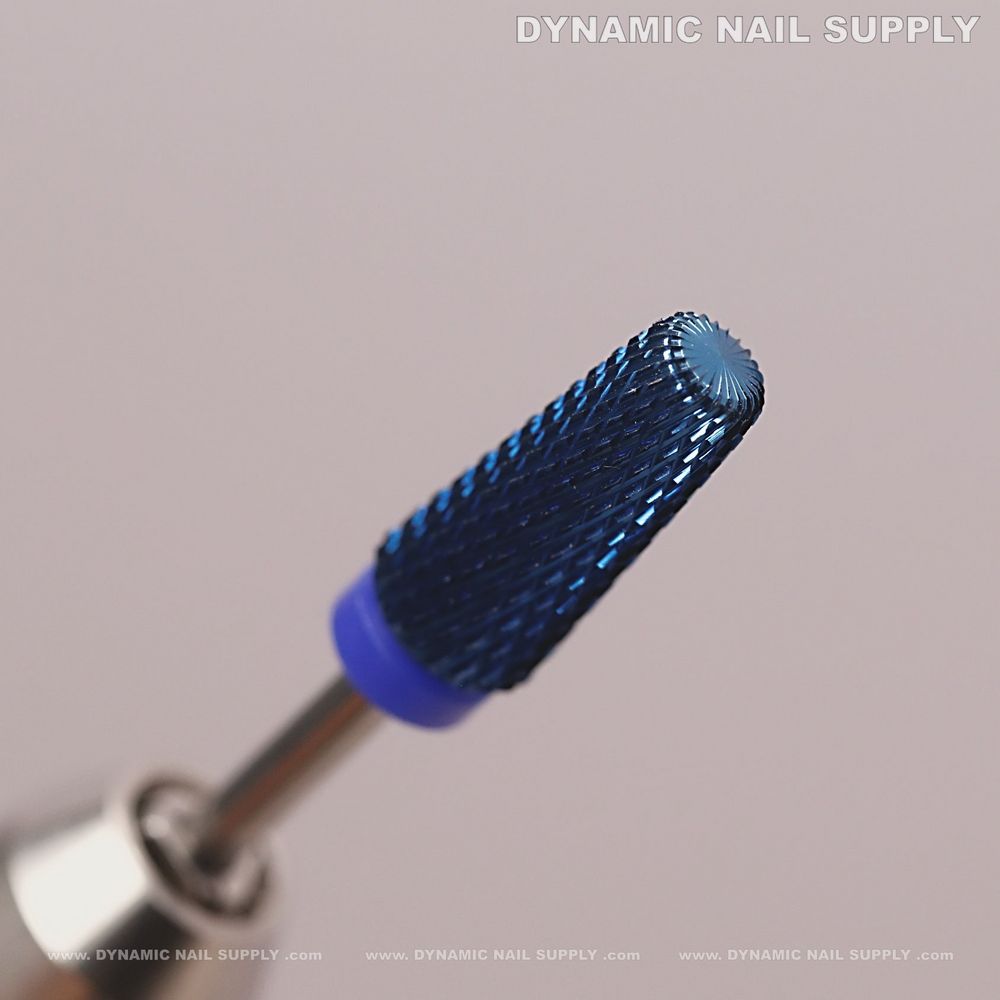
In training drills, have techs perform three passes at low, mid and high settings to feel changes. Emphasize that the visible cross-cut texture increases cutting aggression compared with a smooth barrel, so higher speeds will remove material faster and generate heat sooner.
Hand Positioning
Teach seated posture and hand bracing routines. Support the client’s finger by resting the thenar or ulnar side of your palm on the table; this isolates the forearm and stabilizes micro-movements. Grip the handpiece lightly near the collar—not at the end of the shank—so small rotational feedback from the cobalt head transmits into your fingertips.
- Align the bit axis with the nail’s surface; a shallow angle reduces gouging risk.
- For cuticle sealing and smoothing moves, keep the tip parallel to the nail plate and use lateral sweeping motions.
- If you need a directional change, pause rotation or back off pressure before repositioning to avoid sudden catches on the cross-cut texture.
Pressure & Motion
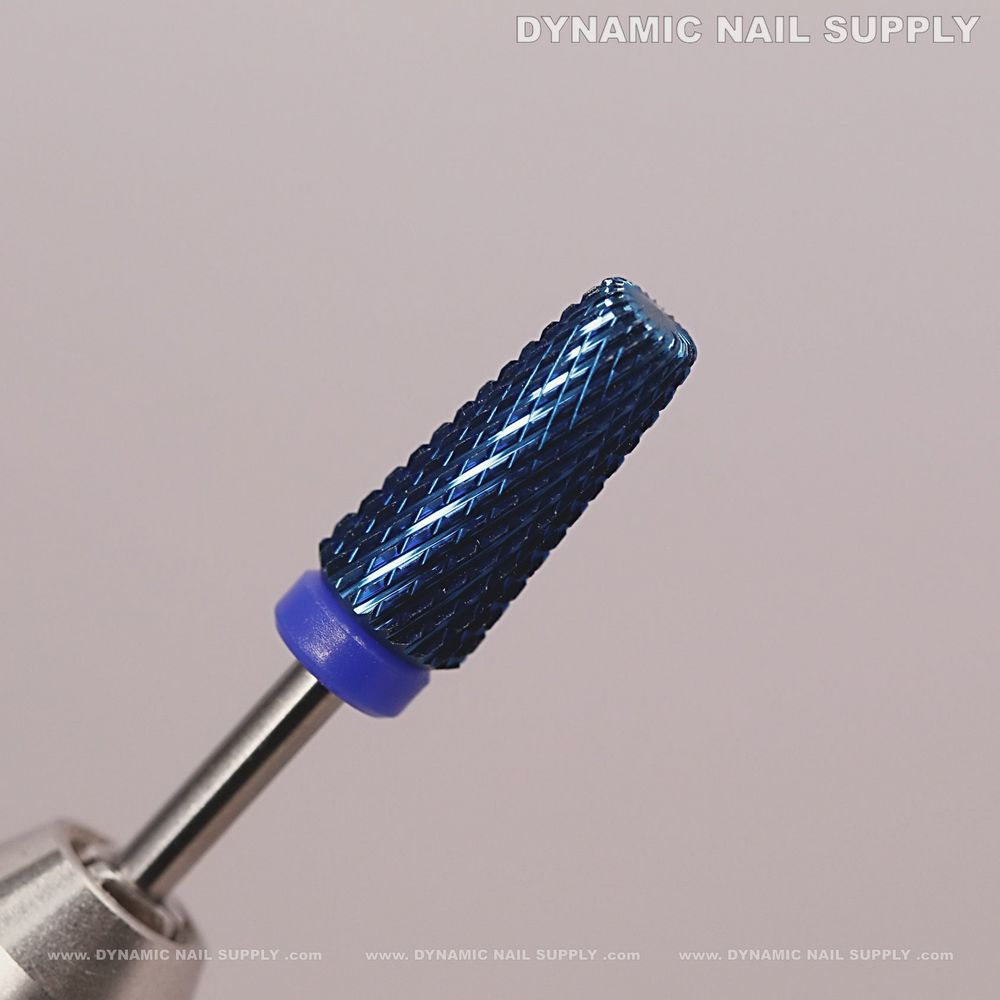
Pressure controls are the primary safety tool. The bit’s medium grit removes efficiently, so teach light, consistent pressure combined with multiple short passes rather than a single heavy stroke. Use continuous motion—feathering strokes across the surface—so heat dissipates and debris clears from the cross cuts.
- Light pressure: allows the carbide to cut without stalling; reduces heat and prevents chatter.
- Short passes: limit contact time per area to avoid hotspots on the nail plate.
- Observe return debris: fine, evenly dispersed particles indicate appropriate pressure; stringy or large chunks suggest too much force or incorrect angle.
Preventing Heat and Chatter
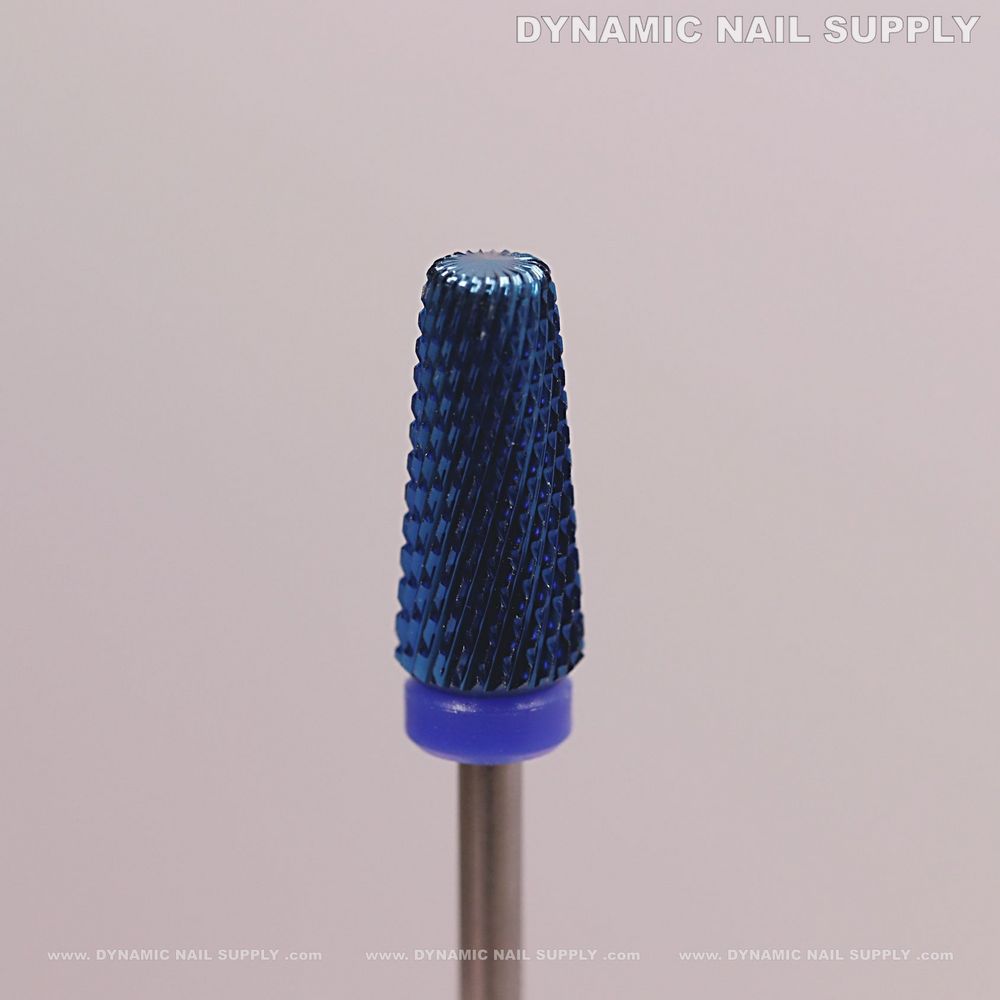
Train techs to recognize early signs of heat and vibration. The blue carbide’s reflective facets and cross-cut texture will hold debris; when debris compacts, friction increases. If the client reports warmth or the tool emits a rasping vibration, stop immediately and reassess speed, torque and pressure.
- Lower RPM one step and test with a light sweep.
- Reduce torque slightly to avoid high-resistance rotation under pressure.
- Increase lateral movement; do not hold the bit stationary in one spot.
Encourage techs to work in passes and to use a dust extraction system where available. The purple collar and shank should be inspected regularly for lodged debris at the junction.
Technique Drills
Structure short practice drills for trainees. Each drill should focus on one variable: speed, torque, pressure or angle. Have techs record the setting and outcome for each pass and compare results.
- Drill A — Speed focus: three 30-second passes at ascending speeds, same light pressure.
- Drill B — Pressure focus: constant mid-speed, vary pressure from light to firm in measured steps.
- Drill C — Angle focus: sweep at 0°, 10° and 20° to see how the cross-cut texture responds.
Best For
- Smoothing and refining acrylic surfaces where medium material removal is needed.
- Technicians who switch hand orientation—works in both clockwise and counterclockwise rotations.
- Short-form nail shapes and industrial-inspired sets that benefit from metallic detail work.
Not Ideal For
- Delicate natural nail thinning where very low abrasion and fine grit are required.
- Prolonged heavy reduction of thick product—choose coarser grit for bulk removal.
- Situations needing a completely smooth, non-textured finish in a single pass.
Care & Safety
Instruct staff to inspect the blue carbide head before each shift for clogged cross cuts and to clear debris with a gentle brush only when the bit is removed from the handpiece. The purple collar is a seating indicator—verify it is intact and not cracked. Never use excessive lateral force that can bend the shank. If your handpiece gets warm, pause and allow it to cool; frequent stalls indicate torque is set too low or pressure is too high.
Putting It Into Practice
Run supervised client sessions where a trainer monitors torque, RPM and pressure, using the cobalt-blue 5-in-1 bit for shaping and smoothing. Ask techs to narrate the control changes they make as they work so you can correct hand position and motion in real time. Keep a laminated quick-reference card at each station listing starting RPM, mid-range torque cue and the stop-and-check signs for heat or chatter.
For product reference and to review the bit’s visual cues while training, consult the item here https://dynamicnailsupply.com/products/5-in-1-fine-grit-drill-bit-blue-color-good-for-shaping-and-smooth-out-copy
Price note: the listed price is $10.89; prices may change. This training approach treats the tool as a performance instrument—observe the cobalt-blue finish and collar as part of your diagnostic routine.
Explore the product details and practice drills to integrate this blue 5-in-1 into your salon workflow.