
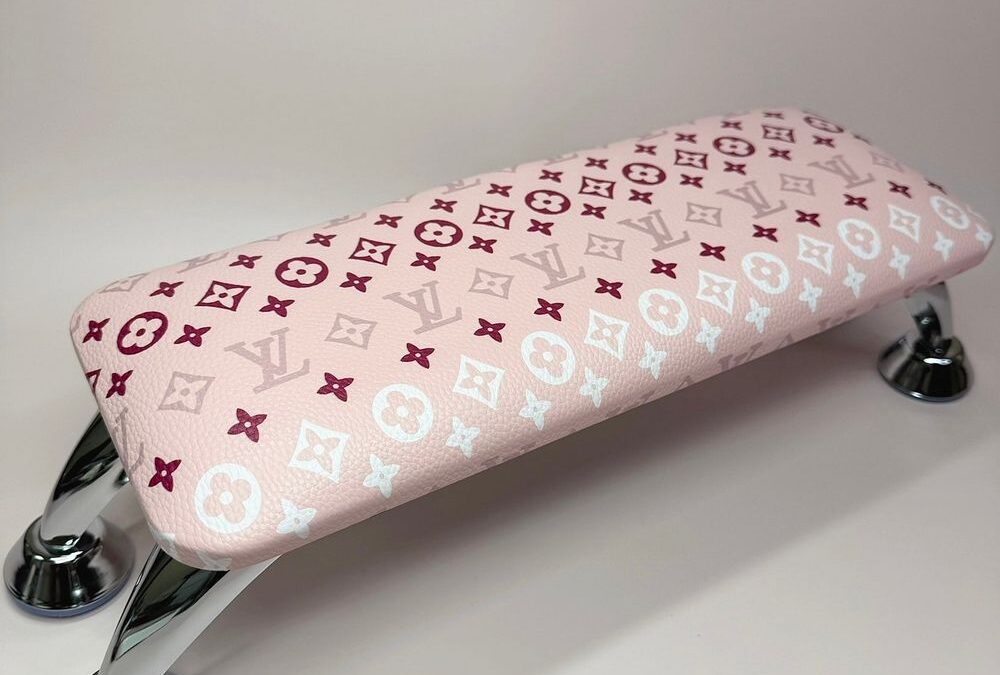
An armrest that looks like part of your styling — not a utility — changes how clients perceive the service. Training your team to prevent print fading armrest on the (Pink White LV Pattern) Leather Cushion Armrest with Pillow means protecting the repeating monogram print, the pebble‑grain texture, and the polished chrome legs without sacrificing hygiene.
Surface overview
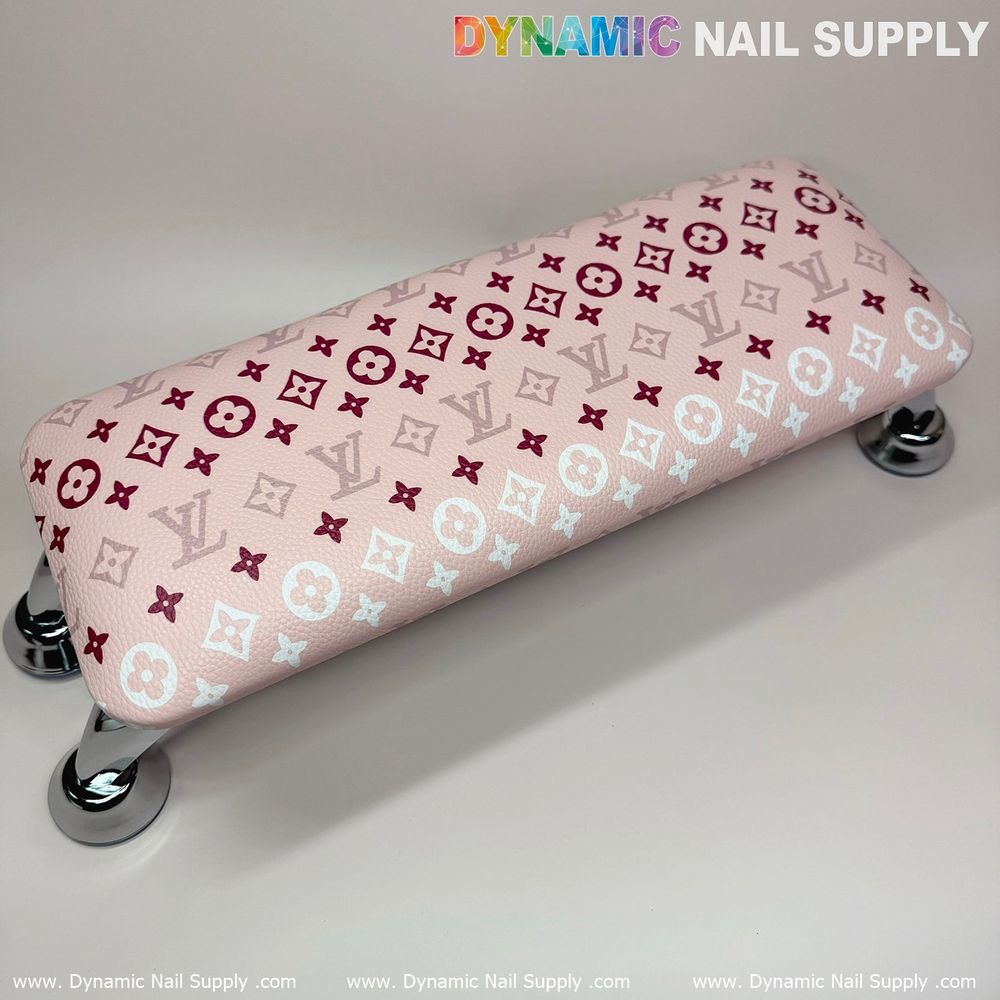
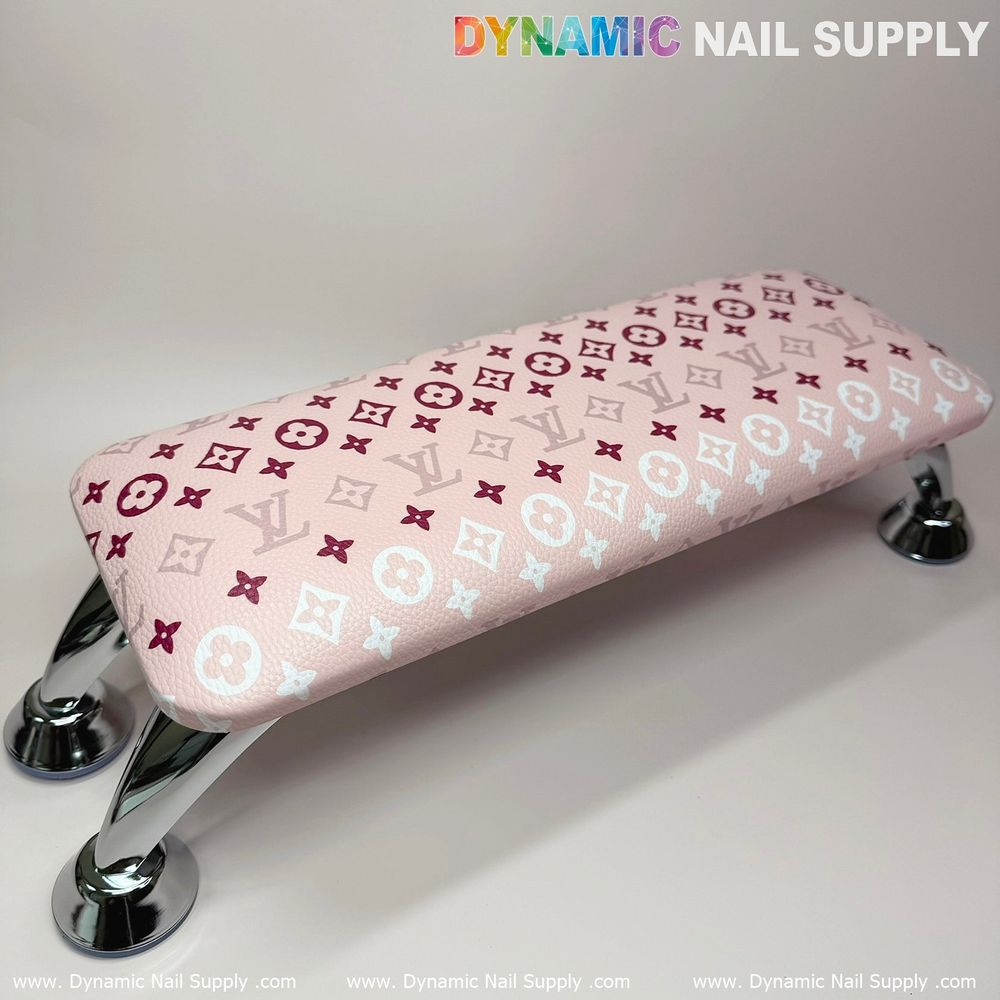
Start by teaching staff to recognise this unit’s materials. The pad is a pebble‑grain faux‑leather with a low‑satin matte print rendered in light blush pink, white, pale mauve/taupe and deep berry. The hardware is polished chrome with curved legs and round bases. That combination requires low‑moisture cleaning, non‑abrasive tools and careful attention at seams and bracket contacts.
Tools and supplies
- Soft microfiber cloths (lint‑free, low pile)
- Isopropyl alcohol 70% in spray bottle for targeted disinfection
- Mild pH‑neutral detergent diluted in a spray bottle (1–2 drops per 16 oz water)
- Disposable nitrile gloves for staff during deep cleaning
- Small soft‑bristled brush for pebble texture (dry use)
- Microfiber polishing cloth for chrome hardware
- Absorbent paper towels or single‑use clinic wipes
- Labelled spray bottles and small test swabs for spot tests
Pre‑service quick reset
Teach a two‑step between‑client routine that takes under 90 seconds: (1) wipe the cushion surface with a dry microfiber to remove dust and nail debris; (2) mist a cloth lightly with diluted pH‑neutral detergent and blot once across the contact zone. Never spray directly onto the cushion — saturation is the primary cause of motif softening.
Spot treatment protocol
- Assess the mark type: oil, polish, cured product, or ink. If unsure, treat as polish/sticky residue.
- For dried polish flakes: gently lift with a dry soft‑bristled brush, working along the pebble texture to avoid rubbing pigment from printed motifs.
- For fresh polish or sticky residue: blot with a paper towel to remove excess, then dab a microfiber cloth slightly moistened with pH‑neutral solution. Work outward from the stain; do not scrub back and forth over the print.
- For grease/oils: place a dry microfiber over the area to absorb, then use a single light pass with isopropyl on a test swab at an inconspicuous border. If no discoloration appears after 30 seconds, proceed with a lightly dampened cloth and immediate drying.
Weekly deep care
Once weekly perform a controlled cleaning that protects the matte print and removes embedded debris:
- Put on gloves. Remove the armrest from the table if portable and place it on a clean surface with the chrome legs accessible.
- Dust the textured surface with a soft brush to dislodge particles in the pebble grain.
- Spray diluted pH‑neutral solution onto a microfiber (not the pad) and wipe in single directional strokes following the long axis of the rectangular cushion. Avoid circular scrubbing that abrades printed motifs.
- Clean seams and the anti‑slip bracket area with minimal moisture; use a dry swab followed by a barely damp cloth if needed.
- Dry immediately with an absorbent towel and allow to air dry fully before returning to service.
Chrome hardware care
Chrome legs are visually important and should be polished separately. Use a small amount of water or a mild cleaner on a microfiber polishing cloth. Buff gently to remove fingerprints and smudges. Keep cleaning liquids away from the cushion edge and hardware mounts; excess liquid can wick into seams and affect the print.
What to avoid
- Abrasive cleaners or scouring pads (they remove printed motifs)
- Bleach, strong solvents, concentrated alcohol in bulk (they can fade or remove the matte print)
- Saturating sprays or soaking the pad (moisture weakens adhesives and inks)
- Steam cleaners near the cushion surface
- Rubbing aggressively across the printed monogram repeat
Training drills
Practice makes reliability. Run three short drills with new staff: a 60‑second between‑client reset; a 5‑minute spot removal scenario (polish spill); and a supervised weekly deep clean. Assess technique: direction of wiping, moisture control and edge protection near chrome fittings. Use the pebble texture to teach gentle brushing motions rather than frictional scrubbing.
Documentation checklist
- Log weekly inspections: visual check for print loss, seam separation, and bracket integrity.
- Record spot treatments that required solvent use; if a solvent was used note the test area and result.
- Rotate which tech performs the weekly deep clean so all staff achieve competency.
Best for
- Salons prioritising appearance and brand cohesion (feminine palette)
- High‑visibility stations where the repeating monogram design matters
- Studios that can implement disciplined low‑moisture protocols
Not ideal for
- Environments without a written cleaning SOP or staff training
- Heavy‑traffic mobile setups where the armrest will be frequently exposed to outdoor contaminants
- Stations that require aggressive solvent use or steam sanitation
Safety and handling
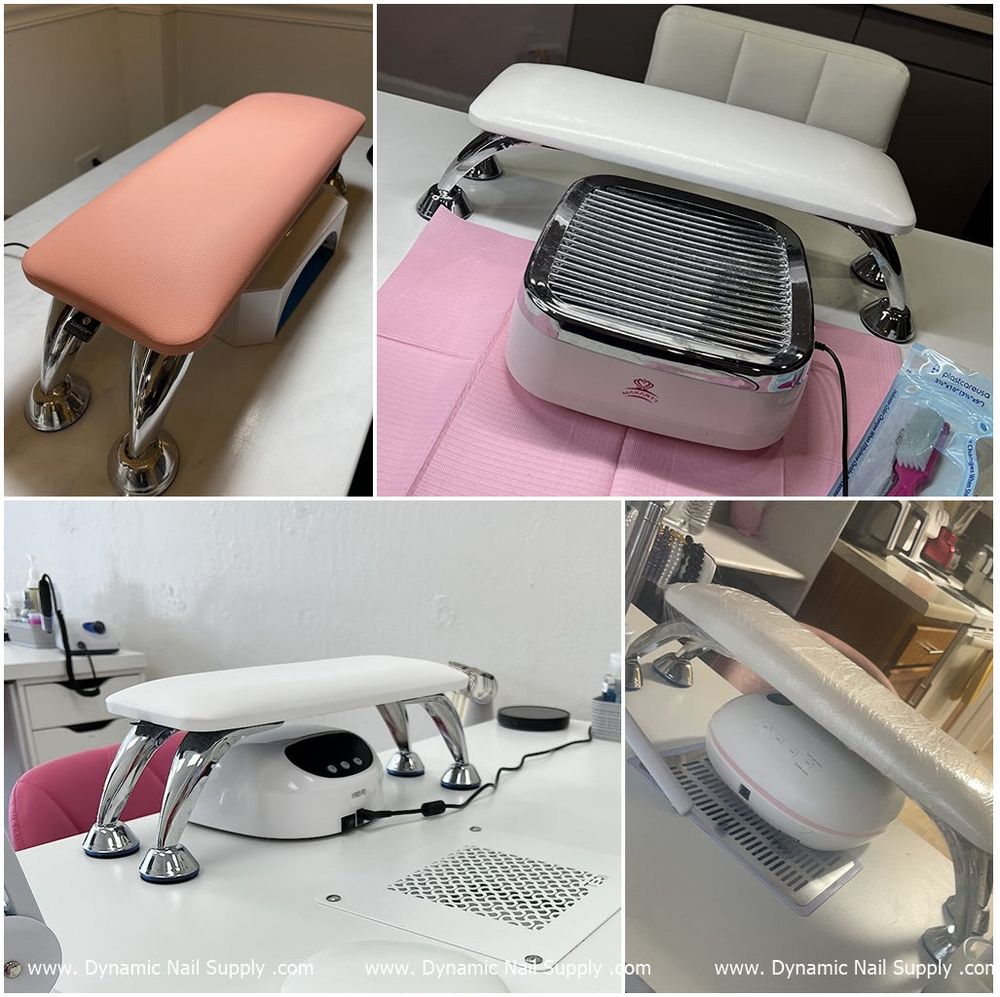
Avoid prolonged skin contact with concentrated cleaners; use gloves for deep work. Keep liquids away from electrical devices such as UV lamps; this armrest’s height allows a lamp to sit beneath it, so place cleaners on a separate tray. Inspect the anti‑slip bracket and chrome leg mounts regularly to ensure stability during services.
Training your team in these routines preserves the light blush cushion, the white, mauve and berry printed motifs and the chrome hardware. The unit is available through standard suppliers for around $25; prices may change. For product details and to check stock, see the listing here https://dynamicnailsupply.com/products/pink-white-lv-pattern-leather-cushion-armrest-with-pillow-for-manicure-pedicure-reposabrazos-para-manicura