
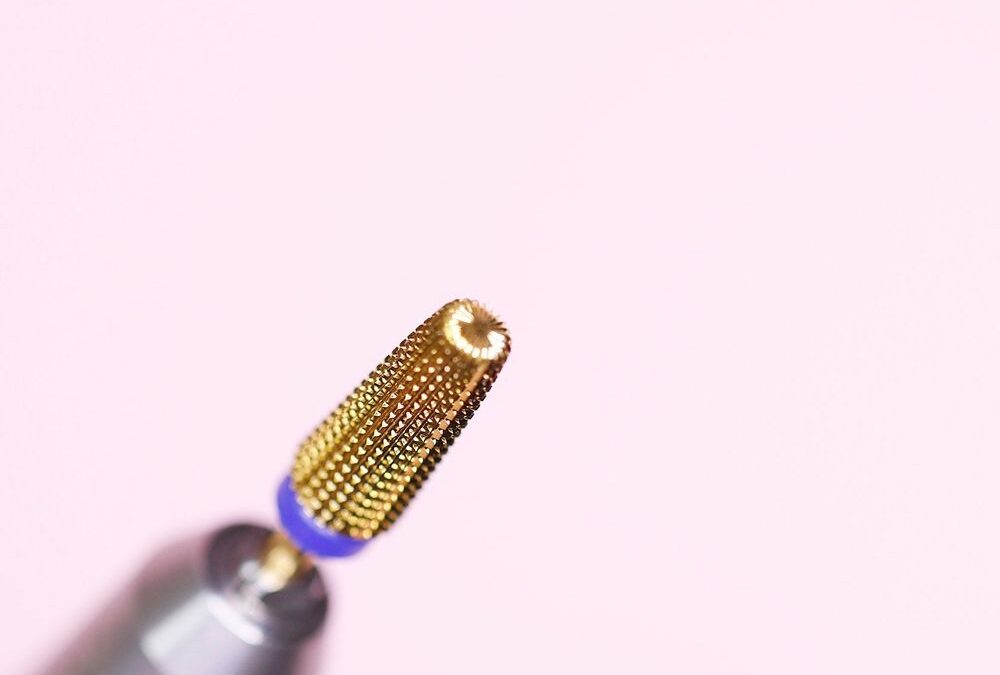
Start from an unexpected detail: the purple rubber collar on this 5-in-1 Medium grit Drill Bit signals more than a color code — it marks an interface that needs different handling than the gold-coated fluted barrel. When you train staff, focus on protecting that metallic finish and the fine ridged cutting teeth while keeping the bit hygienic and performance-ready.
Tool ID
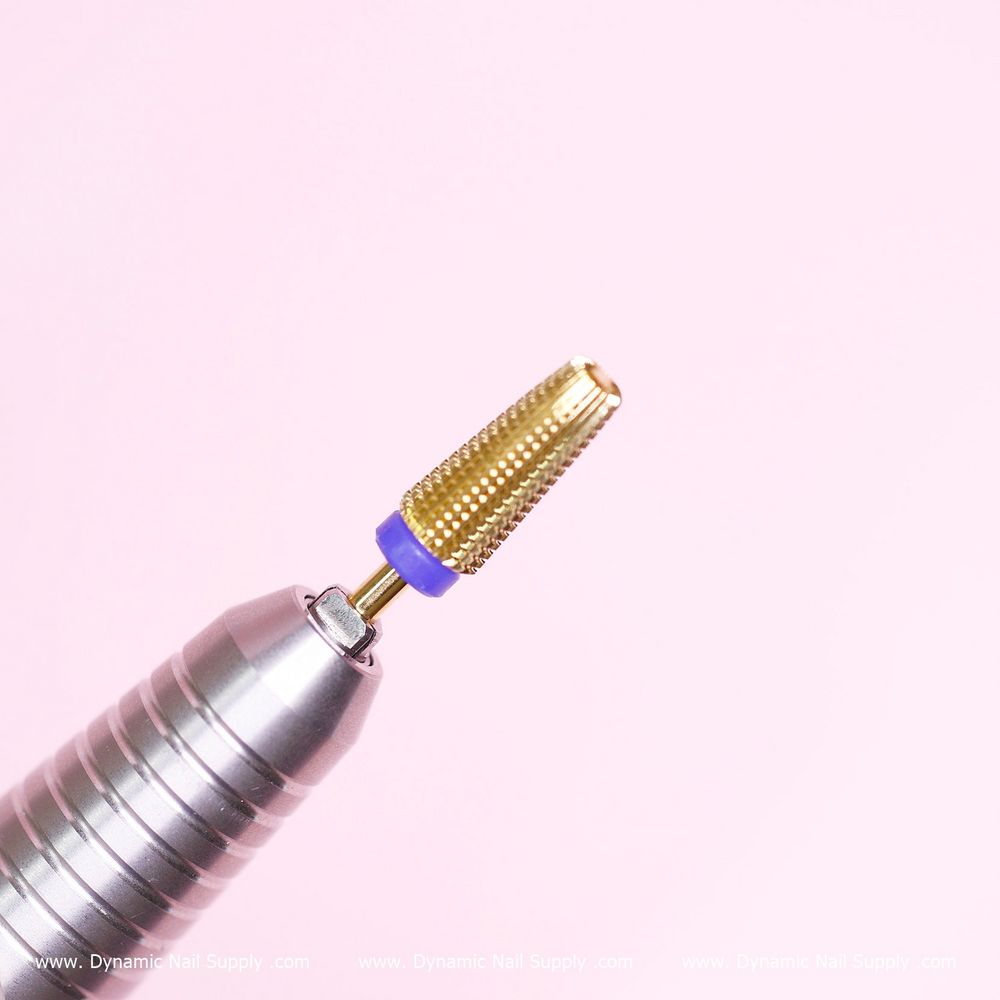
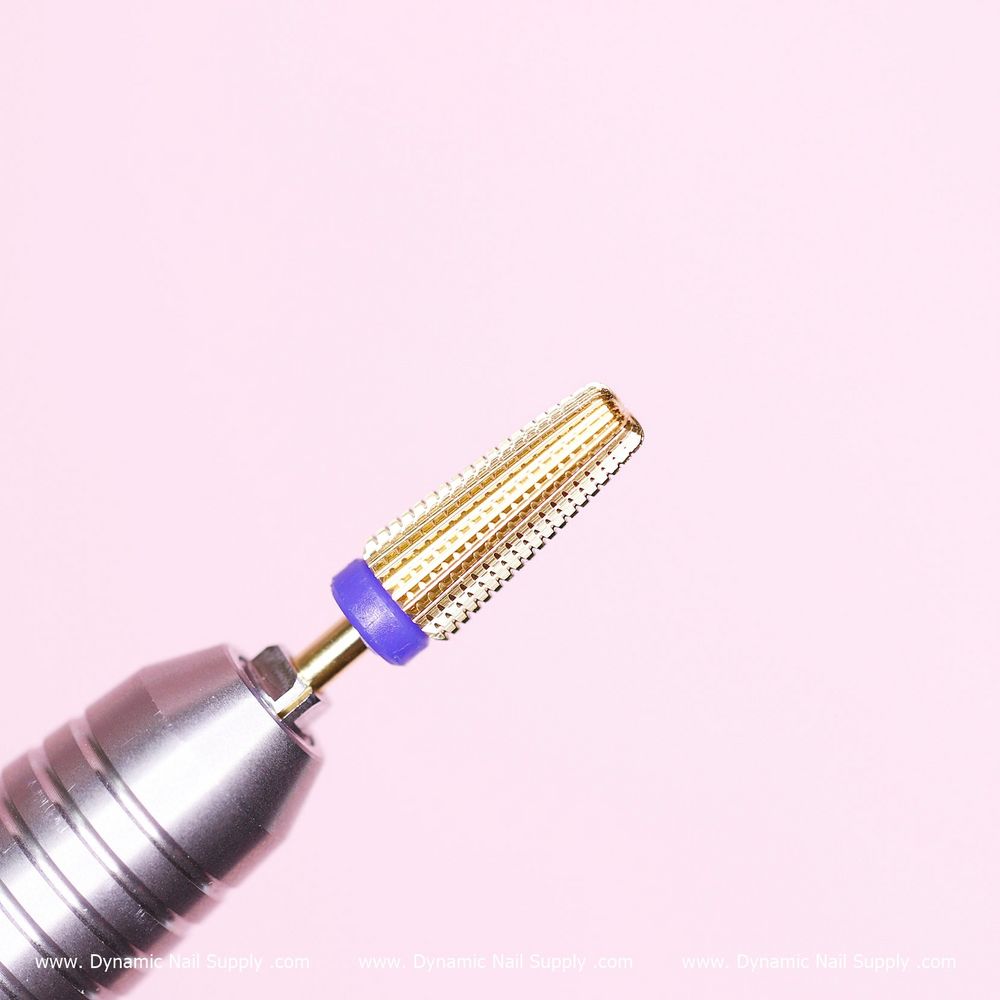
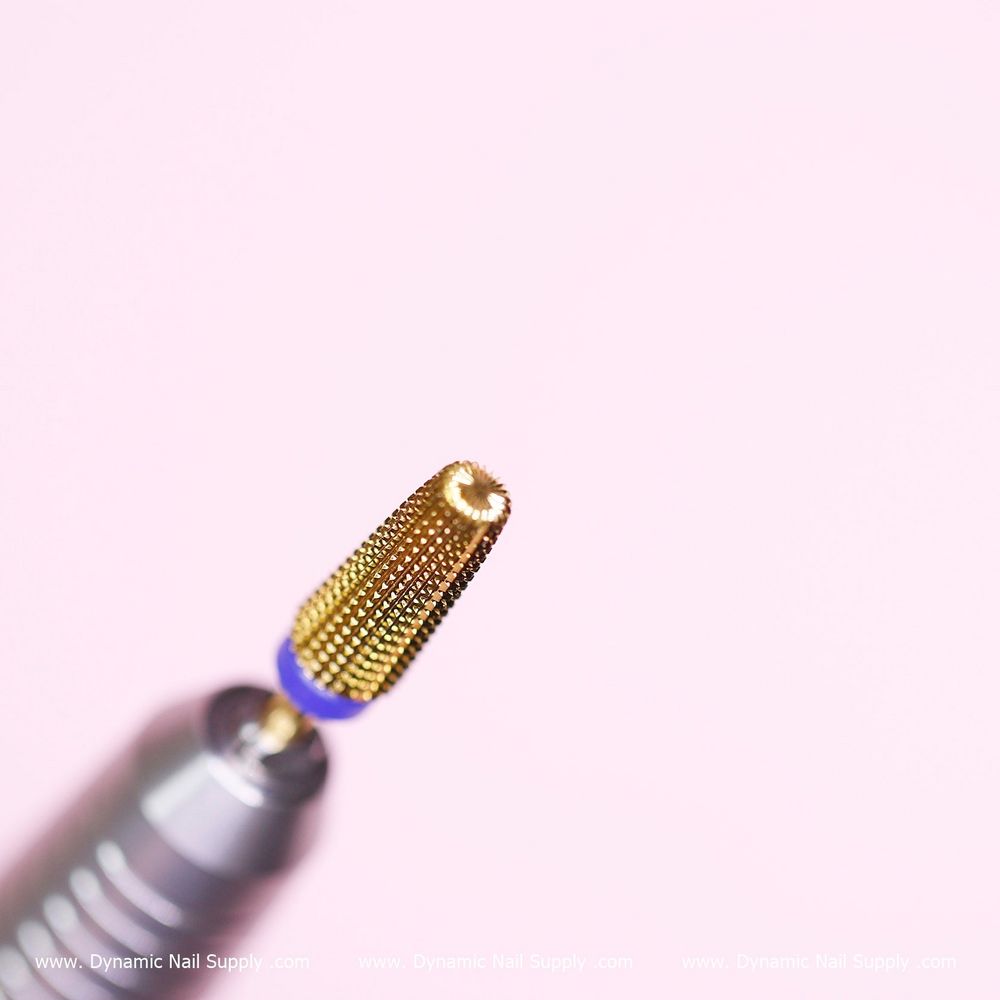
Teach technicians to identify this specific style: a gold-coated fluted barrel with visible multi-row ridges and a purple rubber collar seated against a silver handpiece. Emphasize that the gold surface is a coating, not solid metal — aggressive abrasion or harsh chemicals can dull it or change cutting behavior. Reinforce that the medium grit is designed for shaping, smoothing and sealing around the cuticle, and that ambidextrous use (clockwise or counter-clockwise) is part of its value.
Daily Workflow
Create a simple, repeatable sequence for every use. Use the checklist below as a training script so staff perform the same steps every time:
- Inspect visually under bright light for debris, residue or rubber fragments trapped in the flutes.
- Remove coarse debris dry, using a soft nylon brush or compressed air directed along the flutes — do not use metal picks.
- Soak briefly in a gentle enzyme or neutral pH ultrasonic solution if recommended by your disinfectant manufacturer; keep soak times minimal to protect coating.
- Rinse thoroughly with warm water and immediately dry with compressed air or a lint-free cloth to prevent spotting.
- Complete disinfection per salon protocol using EPA-registered products compatible with coated tools or validated cold sterilants; follow contact times exactly.
Cleaning Techniques
Train staff on tools and motions that remove buildup without abrading the gold finish. Use these accepted techniques and caution about what to avoid.
- Dry cleaning: For routine removal of acrylic dust, run a soft-bristle brush along flute grooves while the bit is stationary in a holder or chuck. Brush from the tip toward the collar so debris exits the cutting edge.
- Ultrasonic: If your salon uses an ultrasonic cleaner, limit cycles and use a neutral solution. Place the bit upright so the purple collar is above the fluid line if possible; avoid long immersion that could trap fluid at the collar interface.
- Manual soak: Briefly submerge the barrel in warm water with mild detergent. Agitate gently; do not scrub the flutes with steel wool or high-abrasion pads.
- Compressed air: After wet cleaning, blow out moisture from the flutes and around the collar. This prevents corrosion at junctions and stops residue accumulation.
Disinfection & Sterilization
Be explicit in training which disinfectants are safe for coated bits and which are not. Emphasize following manufacturer instructions and documented procedures.
- Use disinfectants labeled for metal instruments and verify compatibility with coated finishes. Dilute and contact times must match the label.
- Avoid chlorine-based bleaches and concentrated acids that can strip plating or cause pitting on the gold surface.
- Autoclave use: unless the vendor explicitly states autoclave compatibility, do not autoclave coated bits. High heat and steam cycles can degrade the coating or warp plastic collars.
- Store disinfected bits dry in a clean, ventilated drawer or magnetic strip so the fluted texture is not abraded by contact with other metal tools.
Handling And Use
Train handpiece technique to preserve finish and performance. Small changes in how a technician holds and runs the bit extend its service life.
- Use moderate pressure; excessive lateral force wears the coating faster and deforms cutting teeth.
- Keep strokes shallow and frequent rather than deep and prolonged to avoid heat buildup on the gold surface.
- Match speed and motion to medium grit: a controlled RPM that removes material without chatter will protect ridges and finish.
- Replace rubber collars that show cracking or residue build-up; they affect concentricity and can trap fluids against the barrel.
Inspection And Replacement
Create a practical scoring sheet for staff to log bit condition. Train them to look for visual and tactile cues that indicate decline.
- Visual: loss of reflective gold, visible pitting, or rounded cutting teeth.
- Tactile: excessive vibration in the handpiece, snagging on a test acrylic surface, or uneven cutting action.
- Action: retire bits that show coating failure or structural damage; label them for non-clinical practice if you keep them for demonstrations only.
Best For
- Salon workflows that require frequent shaping and smoothing where a medium grit is appropriate.
- Technicians who alternate hand orientations; the ambidextrous use preserves technique across staff.
- Environments preferring a visible color code — the purple collar aids quick identification.
Not Ideal For
- Heavy bulk removal of very tough acrylics where coarse carbide is needed; that accelerates coating wear.
- Autoclave-only sterilization protocols unless the vendor confirms compatibility.
- Using metal picks or abrasive pads to remove residue — that damages the fluted teeth.
Training Checklist
- Show the bit photo so techs recognize the gold fluted barrel and purple collar.
- Demonstrate dry debris removal, then ultrasonic or manual wet cleaning.
- Run a mock disinfection cycle with an approved product and document contact time.
- Practice handpiece strokes emphasizing light pressure and short passes.
- Inspect and log condition; mark any item for replacement as needed.
Include a short practical drill: have each tech clean and dry a bit, then present it for inspection. Use the scoring sheet to give objective feedback.
Closing Notes
Preserving that gold-coated fluted barrel and purple collar is as much about routine as it is about technique. Train staff to treat the bit as a precision cutting tool: consistent inspection, gentle cleaning methods, and careful disinfection will keep the medium grit performing for shaping and sealing tasks. Price and availability may vary; this 5-in-1 medium design is often stocked at modest cost. For a quick reference to the exact item we covered, check this resource: 5-in-1 medium drill bit